
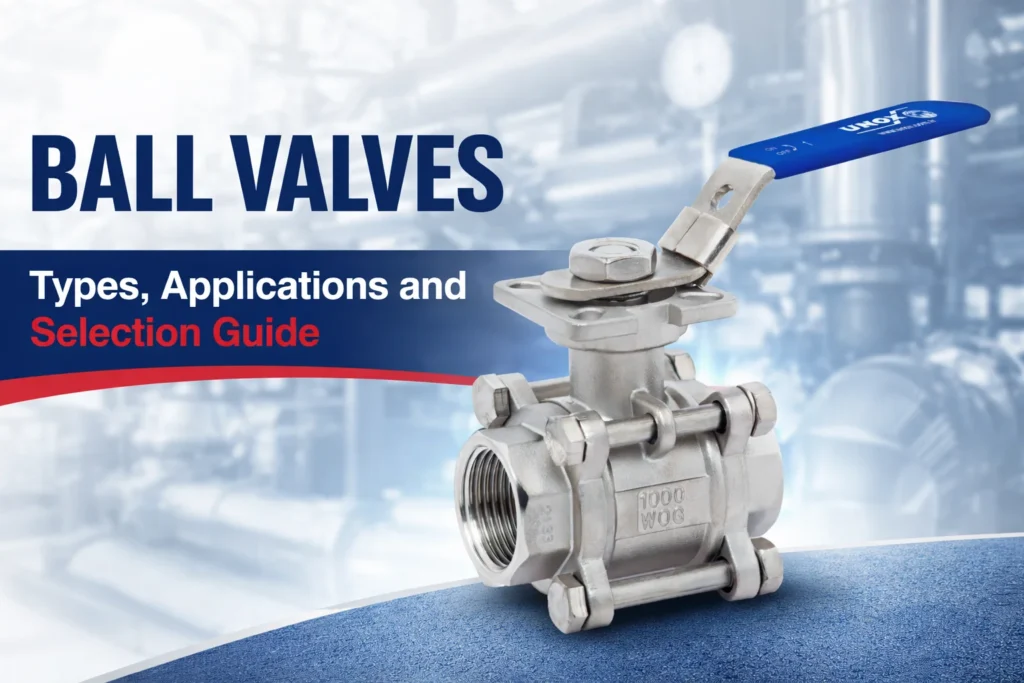
Ball valves are one of the most widely used shut-off valves in industrial flow control. They are valued for tight sealing, fast quarter-turn operation, and long service life across water, air, steam-adjacent utilities, oils, fuels, and many general process media. This guide explains how ball valves work, the main types, materials, pressure classes, and how to select the right valve for your system—especially when automation (pneumatic or electric actuation) is required.
Contents
- What Is a Ball Valve?
- How Does a Ball Valve Work?
- Main Components of a Ball Valve
- Types of Ball Valves
- Body & Trim Materials
- Seat Materials and Temperature Guidance
- Pressure Ratings and Standards
- Ball Valve vs Butterfly Valve vs Gate Valve
- Automated Ball Valves (Pneumatic & Electric)
- Common Applications
- How to Select the Right Ball Valve
- Comparison Tables
- FAQ
What Is a Ball Valve?
A ball valve is a quarter-turn valve that uses a hollow, perforated sphere (“ball”) to control flow. Rotating the stem by 90 degrees aligns the ball port with the pipeline (open) or turns the port perpendicular to the flow (closed). Because the shut-off surface is compact and the movement is short, ball valves provide fast operation and tight sealing when correctly specified.
Ball valves are typically used for on/off isolation. While they can be used for limited throttling in some cases, continuous modulating control is usually better handled by a dedicated control valve or a valve designed for throttling service.
How Does a Ball Valve Work?
The working principle is simple: a spherical ball with a drilled port rotates inside the valve body. When the port aligns with the flow path, the valve is open and offers low pressure drop (especially in full port designs). When rotated 90 degrees, the port is blocked by the ball body and flow stops. Seats (soft or metal) provide the sealing interface between the ball and the body/seat rings.
- Open: port aligned with pipeline
- Closed: port perpendicular to pipeline
- Quarter-turn: fast operation and easy automation
Main Components of a Ball Valve
Most industrial ball valves share these key components:
- Body: the pressure-containing shell (threaded, flanged, wafer-style variants exist depending on design)
- Ball: spherical closure element with a drilled port (often polished for sealing performance)
- Stem: connects handle/actuator to the ball
- Seats: sealing rings (PTFE/RTFE, reinforced polymers, or metal-to-metal in severe service)
- Seals & packings: prevent external leakage along the stem (PTFE, graphite, elastomers depending on duty)
- End connections: threaded (NPT/BSP), flanged (ANSI/ASME, DIN/EN), or other system-specific interfaces
For automation, the stem top is commonly machined to ISO 5211 mounting patterns, enabling direct actuator mounting without bracket kits in many cases.
Types of Ball Valves
Ball valves can be classified by port size, ball support method, end connections, and flow path. Choosing the right type directly impacts pressure drop, sealing, durability, and total cost of ownership.
Full Port (Full Bore) vs Reduced Port
Full port ball valves have a port diameter close to the pipe inside diameter, resulting in low pressure drop and better pigging/cleaning compatibility. Reduced port valves have a smaller port, which can reduce cost and size but increases pressure drop.
Floating Ball vs Trunnion Ball
Floating ball valves rely on line pressure to push the ball against the downstream seat for sealing. They are common in small to mid sizes and general industrial duties. Trunnion valves support the ball with bearings at the top and bottom, reducing operating torque and improving performance in high pressure/large size applications.
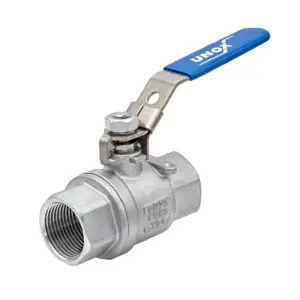
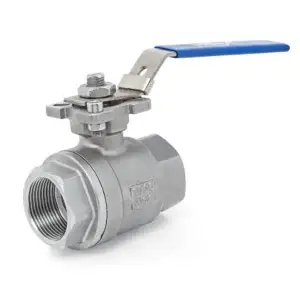
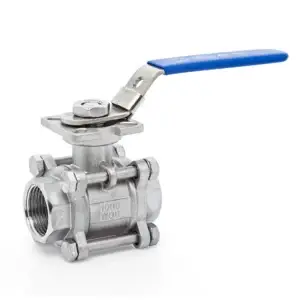
2-Way Ball Valves
Standard on/off isolation valves with one inlet and one outlet. This is the most common configuration in industrial facilities.
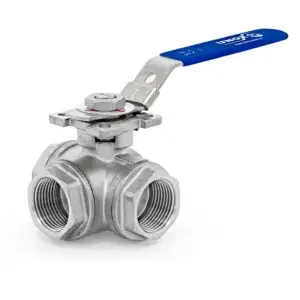
3-Way Ball Valves
Used for diverting or mixing flow. Common port designs are L-port (diverting) and T-port (mixing/diverting depending on position). 3-way valves are popular where compact switching logic reduces piping complexity.
Threaded Ball Valves
Threaded valves (often NPT/BSP) are common in compact skids, OEM equipment, utilities, and smaller line sizes. Correct thread standard selection is critical to avoid leaks or field rework.
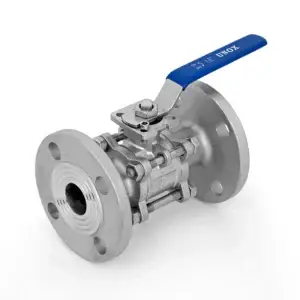
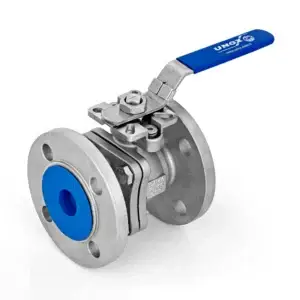
Flanged Ball Valves
Flanged ball valves are preferred for larger lines, higher pressure classes, and easier maintenance (bolt-out/bolt-in replacement). Flange standards commonly include ASME/ANSI and EN/DIN.
One-Piece vs Two-Piece vs Three-Piece Bodies
- One-piece: compact, economical; limited serviceability
- Two-piece: common industrial standard; good balance of cost and maintainability
- Three-piece: best for maintenance; center section can be removed for seat/ball service without disturbing piping
Body & Trim Materials
Material selection must consider corrosion, temperature, pressure, and media compatibility. The most common industrial options include:
- Brass: common for water/air and many neutral fluids; cost-effective for general service
- Carbon steel (WCB / similar): strong, robust, common in oil & gas and higher pressure utilities
- Stainless steel (CF8 / CF8M, 304/316): improved corrosion resistance; preferred for many industrial environments and chemical services
- Ductile iron / cast iron: used in certain utility and HVAC services depending on ratings and standards
Trim (ball, stem, seat carriers) is often stainless steel even when the body is carbon steel, depending on required corrosion resistance and mechanical performance.
Seat Materials and Temperature Guidance
Seats determine sealing performance and temperature capability. Typical guidance (always verify for the specific model):
| Seat / Seal Material | Typical Media | Typical Temperature Range |
|---|---|---|
| PTFE | Water, air, many chemicals | -20°C to +180°C |
| RTFE / Reinforced PTFE | Higher wear duties, improved stability | -20°C to +200°C (model dependent) |
| FKM (Viton) | Oils, fuels, higher temperature elastomer duties | -10°C to +180°C |
| EPDM | Hot water, some steam-adjacent utilities, chemicals | -10°C to +150°C |
| Metal seats | Severe service, abrasive media, high temperature | High temperature (design-specific) |
For high temperature services, pay attention not only to the seat material but also to stem packing (PTFE vs graphite), body rating, and any thermal cycling conditions.
Pressure Ratings and Standards
Ball valve pressure capability depends on body design, materials, end connection standard, and temperature. Common rating systems include:
- ANSI / ASME Class (e.g., Class 150, 300, 600)
- PN Ratings (e.g., PN16, PN25, PN40, PN64)
Important: pressure ratings change with temperature. A Class 150 valve does not maintain the same allowable pressure at elevated temperatures. Always confirm the pressure-temperature chart for the exact valve specification.
Ball Valve vs Butterfly Valve vs Gate Valve
Each valve type has a “best-fit” application range. Ball valves excel at tight shut-off and fast automation. Butterfly valves often win on weight, face-to-face compactness, and cost for larger sizes. Gate valves are common for full-open/full-close isolation in pipelines where slow operation is acceptable.
Related reading (internal links):
Automated Ball Valves (Pneumatic & Electric)
Automating a ball valve is often the most effective way to achieve remote, repeatable shut-off. The key is matching the valve torque requirement to the actuator output and ensuring the control accessories (solenoid valve, limit switches, positioners if needed) are correctly selected.
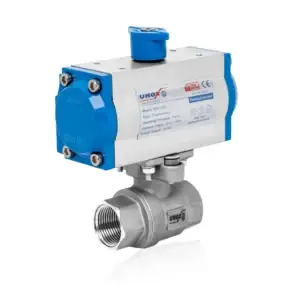
Pneumatic Ball Valves
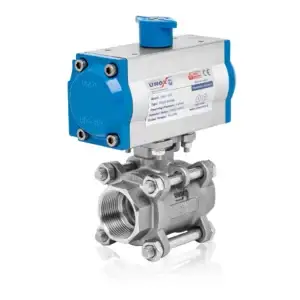
Pneumatic actuators provide fast cycle times and high reliability. For on/off automation, common configurations include double acting (air-to-open / air-to-close) and spring return (fail-open or fail-closed). Pneumatic automation is widely used where compressed air is readily available and fast response is required.
Electric Ball Valves
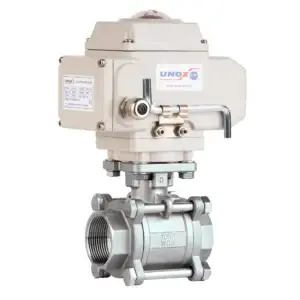
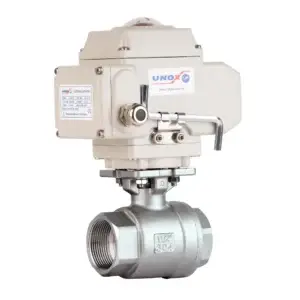
Electric actuators are ideal where compressed air is not available or where wiring-based control is preferred. Electric ball valves are common in building services, remote installations, and OEM packages requiring straightforward electrical integration.
Tip: In pneumatic automation, a solenoid valve is often used to pilot the actuator. If you’re building a complete on/off package, your solenoid valve selection (voltage, IP rating, coil duty, response) directly affects system reliability.
Common Applications
Ball valves are used across a wide range of industries because they offer low leakage and fast shut-off:
- Water and wastewater: isolation and utility distribution
- Compressed air: machine isolation and automation skids
- Oil and fuels: process isolation and equipment protection
- HVAC: chilled water and hot water isolation (application-dependent)
- General process: equipment isolation, batching, and switching duties
For steam systems, ball valves are commonly used for utility isolation and certain ancillary services, but steam-specific components like steam traps are used for condensate removal and efficiency.
How to Select the Right Ball Valve
Use the checklist below to avoid common selection mistakes and reduce downtime.
Ball Valve Selection Checklist
- Media: water, air, oil, gas, chemicals (compatibility with body + seats)
- Pressure: maximum operating pressure + safety margin
- Temperature: operating and peak temperature, thermal cycles
- Size & flow: required flow rate, acceptable pressure drop (full vs reduced port)
- Connection: NPT/BSP or flanged (ASME/ANSI, EN/DIN)
- Operation: manual lever, gear, pneumatic actuator, electric actuator
- Automation accessories: solenoid valve voltage, limit switch box, position feedback
- Environment: indoor/outdoor, washdown, corrosion risk, IP rating needs
- Maintenance: choose 3-piece designs when frequent service is expected
Comparison Tables
Valve Type Comparison (Quick Decision Table)
| Valve Type | Strengths | Limitations | Typical Uses |
|---|---|---|---|
| Ball Valve | Tight shut-off, fast quarter-turn, easy automation | Not ideal for continuous throttling (standard seats) | Isolation, automation skids, utilities |
| Butterfly Valve | Lightweight, compact, cost-effective in larger sizes | Sealing and torque vary by seat/design at higher duties | Water, HVAC, large diameter lines |
| Gate Valve | Full-bore isolation, low pressure drop when fully open | Slow operation, larger footprint, not ideal for frequent cycling | Pipeline isolation, infrequent operation |
Automation Comparison: Pneumatic vs Electric Actuation
| Feature | Pneumatic Actuator | Electric Actuator |
|---|---|---|
| Cycle speed | Fast | Moderate |
| Utilities needed | Compressed air + solenoid valve | Electrical power |
| Best for | High cycling, fast on/off, harsh industrial sites | Air not available, remote wiring-based control |
Need Help Selecting the Right Ball Valve?
Share your media, pressure, temperature and connection requirements. Our team can recommend the best UNOX solution for your application.
Frequently Asked Questions (FAQ)
Are ball valves suitable for throttling?
Standard ball valves are designed primarily for on/off isolation. Limited throttling may be possible in some applications, but continuous modulating control is usually better handled by a dedicated control valve or a valve specifically designed for throttling service.
What is the difference between full port and reduced port ball valves?
Full port valves have a port diameter close to the pipe ID, resulting in lower pressure drop and better flow efficiency. Reduced port valves have a smaller port, which can reduce size and cost but increases pressure drop.
What is a 3-way ball valve used for?
3-way ball valves are used to divert or mix flow. L-port designs are typically used for diverting, while T-port designs can mix or divert depending on the flow path configuration.
Which body materials are common for industrial ball valves?
Common materials include brass for general utilities, carbon steel for robust industrial duties, and stainless steel (304/316, CF8/CF8M) for improved corrosion resistance and chemical compatibility.
How do I choose the right seat material?
Seat selection depends on media compatibility and temperature. PTFE is common for many fluids, reinforced PTFE improves wear resistance, elastomers like EPDM/FKM are used for specific duties, and metal seats are used for severe service conditions.
What is the difference between floating and trunnion ball valves?
Floating ball valves rely on line pressure to push the ball into the downstream seat for sealing and are common in smaller sizes. Trunnion valves support the ball with bearings, reducing torque and improving performance in larger sizes and higher pressure applications.
When should I choose a three-piece ball valve?
Three-piece designs are preferred when maintenance is expected. The center section can often be removed for service without disturbing the pipeline connections, reducing downtime and labor.
How do I automate a ball valve?
Ball valves can be automated using pneumatic or electric actuators. Pneumatic systems typically require a solenoid valve to pilot the actuator, while electric actuators use electrical power and control wiring.
What accessories are common in automated ball valve packages?
Common accessories include solenoid valves (for pneumatic actuation), limit switch boxes for open/close feedback, and position indication or control components depending on the automation requirement.
How can this article be linked with your other guides?
You can link to our guides on solenoid valves for automation fundamentals, butterfly valves for valve-type comparison, and steam traps for steam system efficiency topics. This strengthens topical authority and helps visitors navigate related solutions.